
The recently passed "Big Beautiful Bill" is set to have some significant impacts on the HVAC industry. This legislation presents both promising opportunities and challenges that those in the HVAC sector should be aware of, which this post will discuss.
Positives for the HVAC Industry
One notable benefit of the bill for the HVAC industry is the expansion of permissible uses for 529 education savings plans. Previously, 529 plans were restricted to college tuition. However, now these plans can be utilized for career certifications, apprenticeships, and licensing programs, including HVAC training. This change opens new avenues for aspiring HVAC professionals and their families to fund their education and acquire essential skills.
Another positive is that the bill makes Section 199A, the qualified business income (QBI) deduction, permanent and enhances its advantages. This affects HVAC contractors operating as S corporations, partnerships, and sole proprietorships, as they can continue to deduct up to 20% of their qualified business income.
The enhancement comes in the form of higher income thresholds before the deduction begins to phase out. The new phase-out begins at $75,000 for individuals and $150,000 for married couples filing jointly. This is an increase from the previous limits of $50,000 for individuals and $100,000 for married couples, meaning a greater number of HVAC contractors will be able to claim the full deduction.
Challenges for the HVAC Industry
A significant downside of the bill for the HVAC industry is the repeal of Section 25C and 25D tax incentives for projects starting after December 31, 2025. These residential tax incentives were instrumental in encouraging homeowners to invest in energy-efficient and clean energy improvements, thereby generating substantial business for HVAC contractors.
Section 25C, the energy efficiency home improvement credit, worth up to $3,200 annually for qualifying energy-efficient upgrades, was a key driver for the adoption of energy-efficient HVAC equipment. Section 25D, the residential clean energy credit, offered a 30% federal tax credit for geothermal heat pump installation. The discontinuation of these incentives could lead to a decrease in demand for these types of energy-efficient installations.
Another downside is that commercial HVAC tax incentives are also slated for a phase-out, albeit on a different timeline than the residential incentives. Sections 45L and 179D are set to expire for upgrades and projects starting after June 30, 2026.
Section 45L provides tax incentives to homebuilders and developers who construct or substantially reconstruct energy-efficient homes, while section 179D, enacted in 2005 and made permanent in 2020, allows the owners of commercial buildings to claim deductions for investing in high-efficiency HVAC systems, lighting, and building envelopes. This provision has been recognized for its role in fostering job growth and spurring innovation across the engineering, manufacturing, and construction sectors.
About Mid Florida A/C
Mid Florida A/C is a reliable heating and air conditioning company serving DeBary and the surrounding areas since 1980. They offer personalized service, extended warranties, and customer education. Call them for heating and air conditioning services in DeBary, FL.
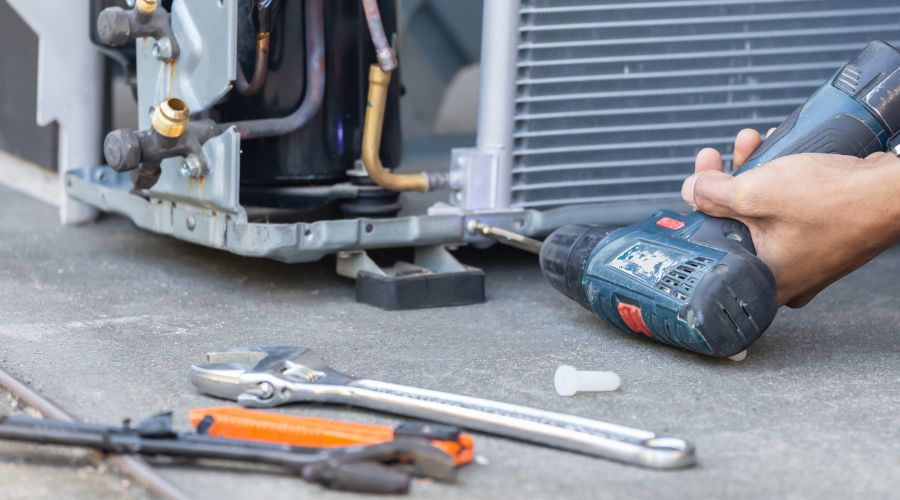

 Unexpectedly high energy bills often indicate that an air conditioning system requires repair or air conditioning maintenance. When a unit operates inefficiently, it consumes excessive electricity while struggling to maintain comfortable temperatures. Common culprits include clogged filters, refrigerant leaks, and worn components, all of which force the system to work harder than necessary.
 While a heat pump system might not be the solution for every home, it can be a great choice for many. The systems offer many wonderful benefits that range across several categories. Check out these benefits:
  Just like any other system, a heat pump will need maintenance and repairs from time to time. These are some common signs it’s time for
  High energy bills can be one of the first signs of heater trouble. With rising energy prices impacting budgets, addressing inefficiencies in the heating system that drive up costs is crucial, and for most homeowners, it’s easy to spot.
  Heaters are usually installed out of sight, making it challenging to detect visible issues. That’s why using other senses, like hearing and smell, can be vital to identifying problems early.
 The main function of a heating and air conditioning system is to pull in air, bring it to a certain temperature, and send it throughout the home to keep the house comfortable. The intake will also attract whatever is floating in the air. Filters catch and trap these particles and contaminants before they can enter the unit and affect its performance. They are also important for the health of the residents of the household, particularly those with chronic respiratory issues such as asthma and allergies.
 So, how often do air filters need to be replaced or cleaned? It can depend on the air quality in an area and the type of AC or
 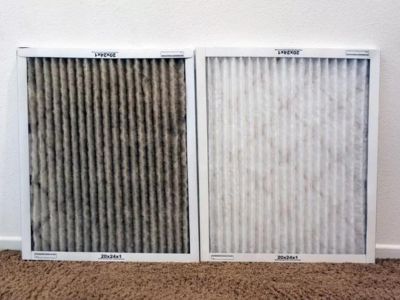 One of the most common causes of reduced airflow in HVAC systems is a clogged or dirty air filter. Over time, air filters can become filled with dust, dirt, and other debris, restricting the flow of air. When an
 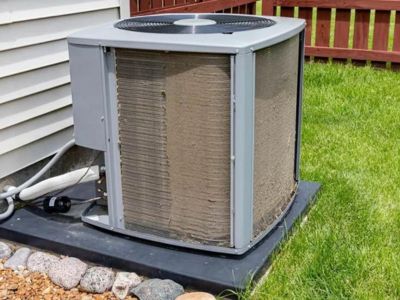 The condenser and evaporator coils play a vital role in an AC system. However, if these coils become dirty, it can cause problems, such as inefficiency, higher cooling costs, and trouble cooling a home. Additionally, a
 Some homeowners may experience more difficulty when scheduling
  It’s no secret that the cost of running an air conditioner during the summer is one of the biggest contributors to monthly utility bills. To keep energy bills lower, especially during the heat of the summer, homeowners need to keep the air conditioner running as efficiently as possible. The best way to protect an air conditioner’s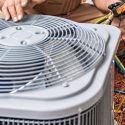
 A slightly more subtle sign that it might be time to call for air conditioner replacement is if the energy bills are higher than normal for seemingly no reason. Heating and air conditioning systems typically consume more energy than any other single appliance in the home, so when they start running inefficiently, they can significantly affect utility bills.
 Strange sounds or odors coming from the AC system or the air registers are another sign that something is wrong with the air conditioner. Noises like rattling, banging, screeching, grinding, buzzing, or clicking can point to broken or loose components or other problems that should be addressed by a technician.
 Energy efficiency is at the forefront of everyone’s mind, as reducing energy use helps keep energy bills low. Unlike traditional central air conditioning and heating systems,
 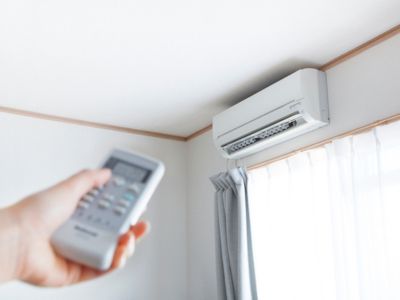 Another advantage of ductless mini split air conditioners and heaters is control, specifically zone control. With ductless mini splits, the heating and cooling for a room or a couple of rooms are done by a single unit that controls the temperature in that zone in the home. Each zone can be precisely controlled to the desired temperature for people in that part of the home.
 The
The  Another unlikely culprit of heating problems is a dirty air filter. While the primary purpose of air filters has nothing to do directly with heating and more to do with cleaning the air and protecting the HVAC system, the dirt, dust, and other airborne debris that gets trapped in its fine mesh can affect how well and efficiently the heater or furnace does its job. When too much dirt accumulates on the filter, the heater runs on reduced